
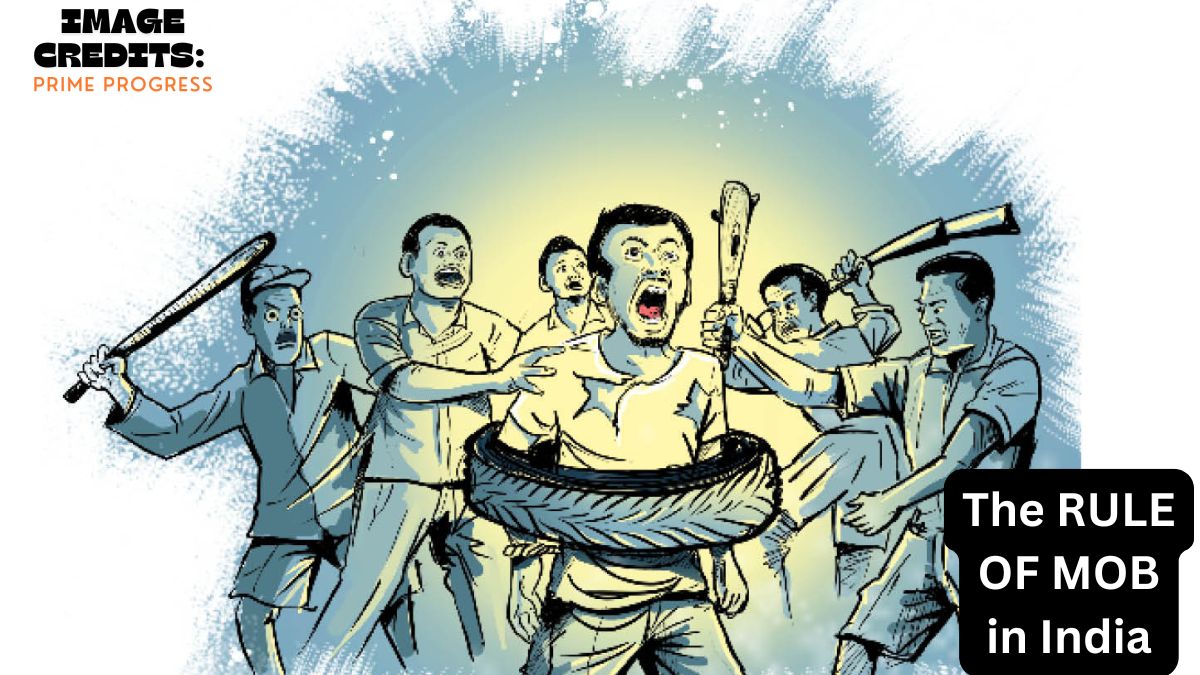
In recent years, India has witnessed a disturbing rise in mob justice carried out in the name of cow protection and ‘dharma,’ where vigilantes target and kill people based on mere suspicion of their involvement in cow slaughter or beef consumption.
The tragic murder of Aryan Mishra, a 25-year-old man killed by a self-proclaimed cow protector, Anil Kaushik, for allegedly smuggling cows, is the latest in a series of such horrifying incidents.
Chased for over 30 kilometers, Aryan was shot dead. If anything, it is a chilling reminder of how law and order have been overtaken by mobs driven by hatred.
I will tell you how this incident is linked to religion. But before that, let’s first talk about a few more recent happenings.
Incidents of Cow Vigilantism and Mob Justice
In the past decade, there have been numerous cases where cow vigilante groups have taken the law into their own hands, often resulting in the death of innocent individuals.
Recently, in Maharashtra, an elderly man was verbally and physically abused by a group of youngsters who suspected he was carrying beef in his tiffin box.
The video of this incident went viral, exposing the deep-seated hatred towards minorities.
The man was targeted for being a Muslim, and his attackers felt justified in their actions because they believed he was engaging in an illegal act.
This narrative, fueled by religious intolerance, has become alarmingly common in India.
Only a while ago, a migrant worker, Sabir Malik, was killed in Haryana on the suspicion of eating beef.
I always wonder how mob justice became ‘normal’ under the current regime. Then I go back to find reasons for my argument and stumble upon past cases.
It probably began in 2014 when Mohsin Shaikh was lynched by a mob in Pune. His killers were released on bail after a few days of arrest.
Last year, everyone was acquitted.
Anaf, Aarif, and Nazim became victims of mob justice in 2015. The incident happened in Dadri, Uttar Pradesh.
They were ‘suspected’ of being cattle thieves.
In 2015, Noman Akhtar was lynched in Himachal Pradesh on suspicion of smuggling cattle.
Zahid Rasool Bhatt was killed in Kashmir by a mob for the same ‘suspicion’ of cow smuggling.
The incident that somewhat lit up the Indian conscience was that of Mohammad Akhlaq. He was lynched by a mob in UP’s Dadri on the suspicion of eating beef.
The list is long, but I want to emphasize the fact that in none of the above cases has any accused been convicted.
So many murders but no convicts.
The Hatred Trap
At the core of all these incidents lies the same driving force—hatred.
Aryan Mishra’s case adds another layer to this disturbing trend. The accused confessed to Aryan’s father that he mistook Aryan for being a Muslim.

This shocking admission sheds light on a deeper issue: the normalization of violence against Muslims.
Media outlets highlighted this confession, almost as if to placate a certain section of society that the murder of a Hindu was a mistake—the “real” target was a Muslim.
Such reporting reflects a societal mindset where crimes are seen as less grievous if the victim belongs to a minority community.
The normalization of violence against Muslims is perpetuated by certain right-wing factions in India, who openly endorse or downplay these hate crimes.
Mob lynchings, murders, and abuses by cow vigilante groups no longer shock the public, as they have become a grim reality that many have come to accept.
For a section of society, Muslims being lynched is perceived as normal or even justified.
Media Reporting and State Backing
Let’s face the truth, the Aryan Mishra case gained prominence because he belonged to the majority religion.
This differential treatment in highlighting crimes based on the victim’s identity points to a systemic bias in how these incidents are reported, discussed, and acted upon.

The root cause of this escalating violence is the rise of a mob justice system in India, where criminals feel empowered by a lack of accountability and a tacit endorsement from the state and law enforcement agencies.
In the name of cow protection, vigilantes have effectively been given a free hand to kill innocent civilians.
The state’s failure to protect minorities is glaringly evident, as concrete action is rarely taken against the perpetrators.
When arrests do occur, the police often apply weaker sections of the law, allowing these criminals to easily secure bail and return to their hateful activities.
This lack of serious consequences emboldens others to take similar actions, believing that they too will escape punishment.
The failure of the state to uphold the rule of law is a significant factor contributing to the rise in mob violence.
Law enforcement agencies, rather than acting as protectors of all citizens, are often seen siding with the mob, either out of fear, bias, or political pressure.
The police, who should be the first line of defense against such atrocities, have often been complicit, either turning a blind eye to these acts or being too slow to respond.
In some cases, they have even been known to support the mob’s actions, further eroding public trust in the system.
Politics of Hatred
The ruling Bharatiya Janata Party (BJP) has also played a significant role in perpetuating this cycle of violence.
By repeatedly using the religion card and vilifying Muslims at every possible opportunity, the party creates an atmosphere of fear and hatred.
This rhetoric emboldens individuals who believe they are defending their religion or culture to take the law into their own hands.
They feel a sense of entitlement and are further encouraged to do whatever they want, often without regard for human life or the rule of law.
A Perilous Mindset
The mental state of such individuals is deeply troubling. Radicalized by an environment that glorifies violence in the name of religion, they view themselves as protectors or heroes rather than criminals.
They are often driven by a misguided sense of duty and are unable to distinguish between right and wrong.
This toxic mindset is a direct result of a continuous narrative that demonizes the “other” and dehumanizes those who are different.
The perils of mob justice cannot be overstated. It undermines the rule of law and erodes the very foundation of a democratic society.
When individuals feel empowered to act as judge, jury, and executioner, it creates a climate of fear and lawlessness.
Innocent people become victims of violence and hatred, and society as a whole becomes more divided and polarized.
Rule of Law Over the Rule of Mob
India must urgently address the rise of mob justice and the state-sanctioned violence that accompanies it.
It is imperative to hold perpetrators accountable and ensure that the law applies equally to all citizens, regardless of their religion or social status.
The police and judiciary must act swiftly and decisively against those who take the law into their own hands.
Only by restoring faith in the rule of law and promoting tolerance and inclusivity can India hope to overcome the dark shadows of hatred that currently loom over the nation.

Founder of the Word Street Journal, Deepak is both a creative soul and a Wordside Romeo.



Leave a Reply